Have you ever pulled a baking tray out of the oven only to find a sad, soggy mess instead of the crispy, caramelized bites you were craving? I definitely struggled with that for years until I finally cracked the code for perfect roasted vegetables. Whether you are using up a fridge full of produce or planning a cozy autumn dinner, mastering this method for perfect roasted vegetables is a total game-changer. Though boiling or steaming are fine options, I wanted that deep, rich flavor that only the oven can bring. The secret lies in understanding the universal technique, temperatures, oil ratios, and seasoning science. You can whip this up with minimal stress, transforming everyday ingredients into something totally crave-worthy. Get ready to ditch the mushy sides forever, because this foolproof method for perfect roasted vegetables delivers vibrant, tender-crisp results every single time!
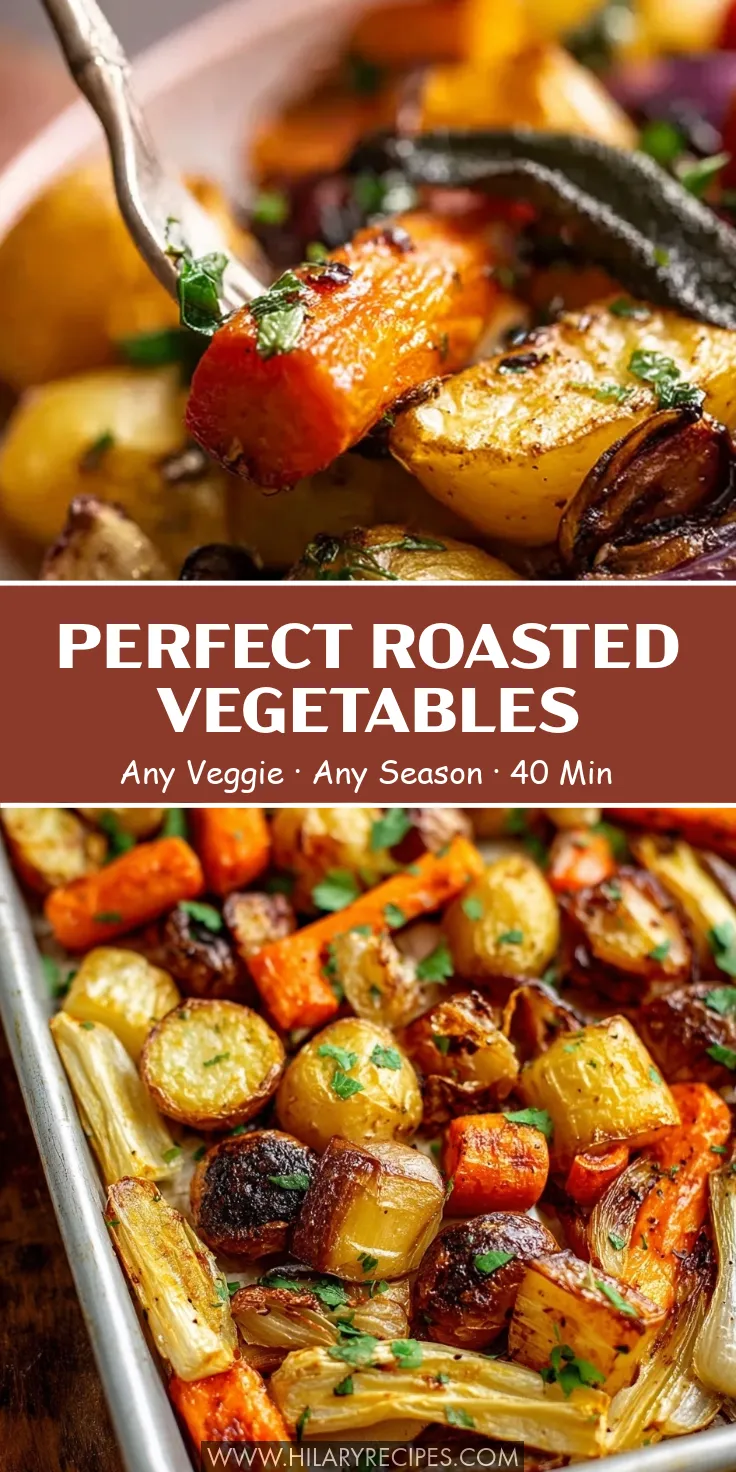
Table of Contents
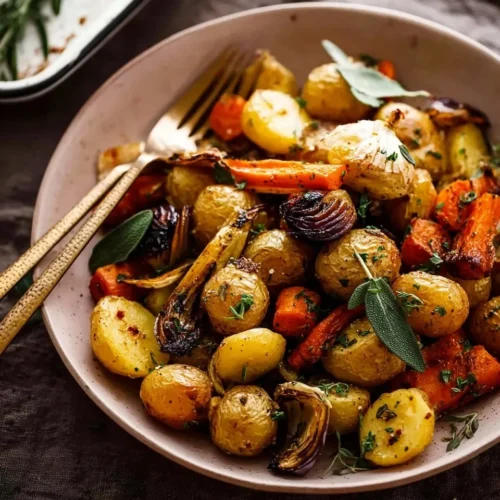
Perfect Roasted Vegetables (Any Veggie, Any Time)

Ingredients
For the Root Vegetables:
- 400 g / 14oz small potatoes skin on (about 10)
- 2 medium-large carrots peeled
- 1 large parsnip 250g / 8oz, peeled
For the Aromatics:
- 1 large red onion 200g / 7oz, peeled
- 5 garlic cloves smashed with skin on
- 5 fresh thyme sprigs
- 3 fresh sage sprigs
For the Seasoning:
- 4 tbsp extra virgin olive oil
- 1 tsp kosher or cooking salt
- ¼ tsp freshly ground black pepper
For the Garnish:
- 2 tbsp fresh flat-leaf parsley finely chopped
Instructions
- Cut the Vegetables: Halve the potatoes (quarter large ones). Slice carrots into 3cm / 1.2″ diagonal triangles, alternating the angle with each cut for more caramelized surface area. Cut the parsnip into 4cm / 1.5″ lengths, then cut into even batons. Cut the red onion in half, slice each half into 4 wedges, then cut each wedge into 2–3 pieces to get roughly 2cm / 0.8″ squares. Smash the garlic by placing the flat side of a knife on each unpeeled clove and pressing firmly with your palm until the clove bursts open but mostly stays intact.
- Season in Separate Bowls: Place the onion in one bowl and toss with 1 tablespoon of olive oil and a small pinch of salt and pepper. Set aside; the onion will be added to the tray later, as it cooks faster than the root vegetables. In a separate, larger bowl, combine the potatoes, carrots, parsnips, smashed garlic, and thyme sprigs. Hand-tear the sage leaves and stems directly into the bowl. Drizzle with the remaining 3 tablespoons of olive oil, the rest of the salt, and pepper. Toss everything together until every piece is well coated.
- Roast, First Round: Preheat your oven to 200°C / 390°F (180°C fan-forced). Spread the seasoned root vegetables in a single layer on a large baking tray, do not crowd the pan, as this causes steaming rather than roasting. Roast for 30 minutes undisturbed until the edges begin to turn golden.
- Add the Onion: After 30 minutes, scatter the seasoned red onion over the tray. Give everything a quick toss with a spatula to redistribute any caramelized bits from the bottom of the tray.
- Roast, Final Round: Return the tray to the oven and roast for a further 60 minutes, tossing once halfway through at the 30-minute mark. The total roasting time is 1 hour and 30 minutes. The moderate oven temperature allows the vegetables to slowly release their natural sugars and caramelize evenly, resulting in deeply sweet, tender vegetables with beautifully golden edges. Do not rush this step by cranking the heat.
- Finish & Serve: Remove the tray from the oven. Squeeze the roasted garlic cloves gently; the sweet, caramelized garlic inside will pop out and mix through the vegetables as you toss. Sprinkle generously with freshly chopped parsley and serve immediately straight from the tray.
Notes
- Spacing is Everything: If you decide to double the recipe, I highly recommend dividing the vegetables between two trays. Overcrowding is the enemy of crispiness!
- Storage: Store leftover roasted vegetables in an airtight container in the fridge for up to 4 days. Reheat in a warm oven or air fryer to bring back the crisp texture.
Nutrition
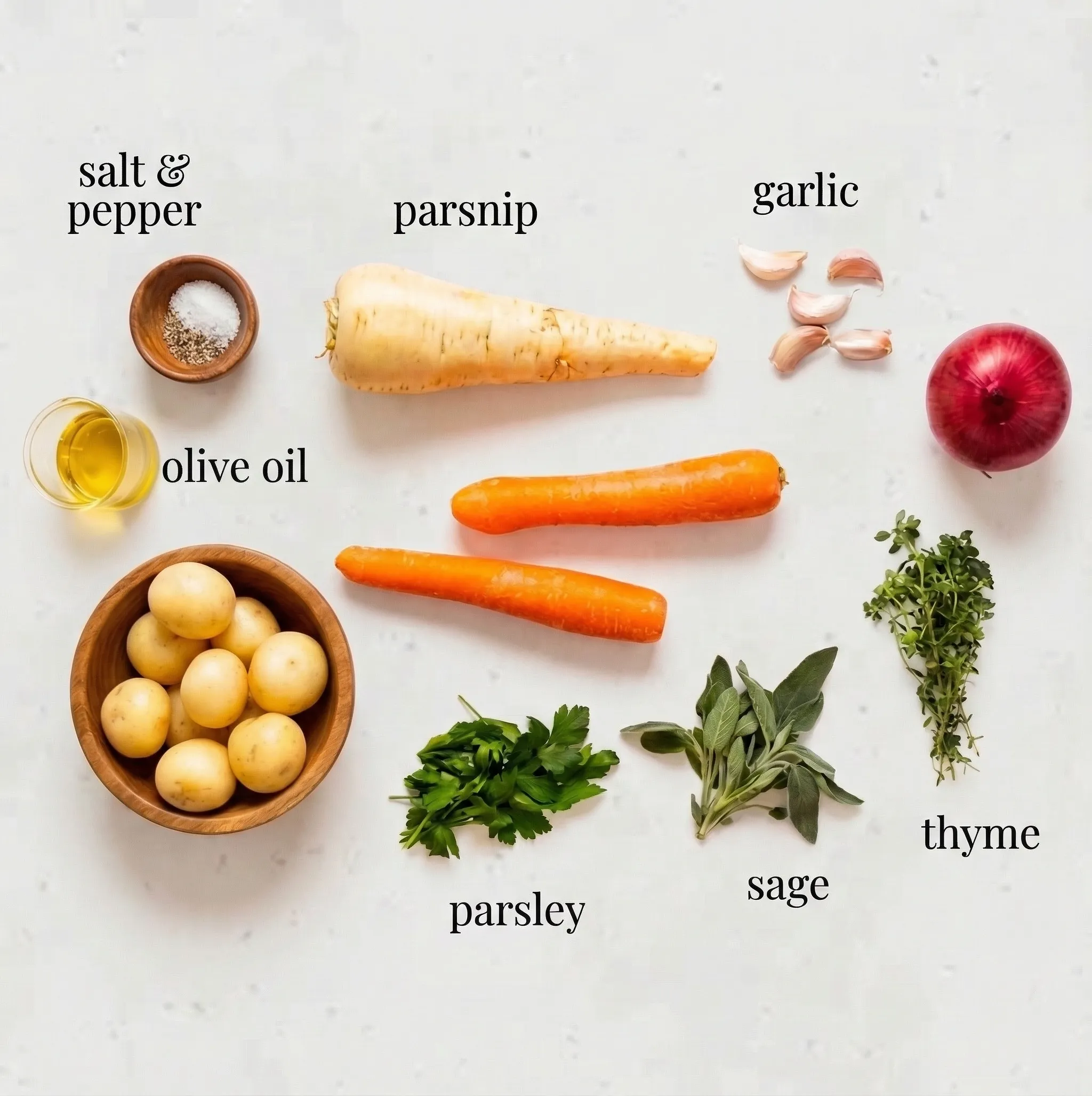
The Cast of Characters
For the Root Vegetables:
- 400g / 14oz small potatoes, skin on (about 10)
- 2 medium-large carrots, peeled
- 1 large parsnip (250g / 8oz), peeled
For the Aromatics:
- 1 large red onion (200g / 7oz), peeled
- 5 garlic cloves, smashed with skin on
- 5 fresh thyme sprigs
- 3 fresh sage sprigs
For the Seasoning & Garnish:
- 4 tbsp extra virgin olive oil
- 1 tsp kosher or cooking salt
- ¼ tsp freshly ground black pepper
- 2 tbsp fresh flat-leaf parsley, finely chopped
How to Make Perfect Roasted Vegetables
Here are the steps to achieving those gorgeous, golden edges we all love.
Step 1: Prep and Cut
First, cut the vegetables. Halve the potatoes, or quarter the large ones. Slice the carrots into 3cm / 1.2″ diagonal triangles, alternating the angle with each cut for more caramelized surface area. Cut the parsnip into 4cm / 1.5″ lengths, then into even batons. Cut the red onion in half, slice each half into 4 wedges, then cut each wedge into 2–3 pieces to get roughly 2cm / 0.8″ squares. Smash the garlic by placing the flat side of a knife on each unpeeled clove and pressing firmly with your palm until the clove bursts open but mostly stays intact. Sorting and grouping vegetables by density and cook time is vital for success.
Step 2: Season the Aromatics
Place the onion in one bowl and toss with 1 tablespoon of olive oil and a small pinch of salt and pepper. Set aside the onion, which will be added to the tray later, as it cooks faster than the root vegetables.
Step 3: Coat the Root Veggies
In a separate, larger bowl, combine the potatoes, carrots, parsnips, smashed garlic, and thyme sprigs. Hand-tear the sage leaves and stems directly into the bowl. Drizzle with the remaining 3 tablespoons of olive oil, the rest of the salt, and pepper. Toss everything together until every piece is well coated. The foundation of perfect roasted vegetables lies in achieving the correct oil coating, including the type, quantity, and distribution.
Step 4: The First Roast
To get perfect roasted vegetables, preheat your oven to 200°C / 390°F (180°C fan-forced). Spread the seasoned root vegetables in a single layer on a large baking tray. Do not crowd the pan, as this causes steaming rather than roasting. Proper temperature and pan spacing are key. Roast for 30 minutes undisturbed until the edges begin to turn golden.
Step 5: Incorporate the Onion
After 30 minutes, scatter the seasoned red onion over the tray. Give everything a quick toss with a spatula to redistribute any caramelized bits from the bottom of the tray. Timing and tossing mid-roast keeps the cooking incredibly even.
Step 6: The Final Roast
Return the tray to the oven and roast for a further 60 minutes, tossing once halfway through at the 30-minute mark. The total roasting time is 1 hour and 30 minutes. The moderate oven temperature allows the vegetables to release their natural sugars and caramelize evenly and slowly. Do not rush this step by cranking the heat.
Step 7: Finishing Touches
Remove the tray from the oven. Squeeze the roasted garlic cloves gently; the sweet, caramelized garlic inside will pop out and mix through the vegetables as you toss. Sprinkle generously with freshly chopped parsley and serve immediately. Adding finishing touches like salt, an acid like lemon, or fresh herbs elevates the whole tray. And there you have it, perfectly roasted vegetables ready to enjoy.
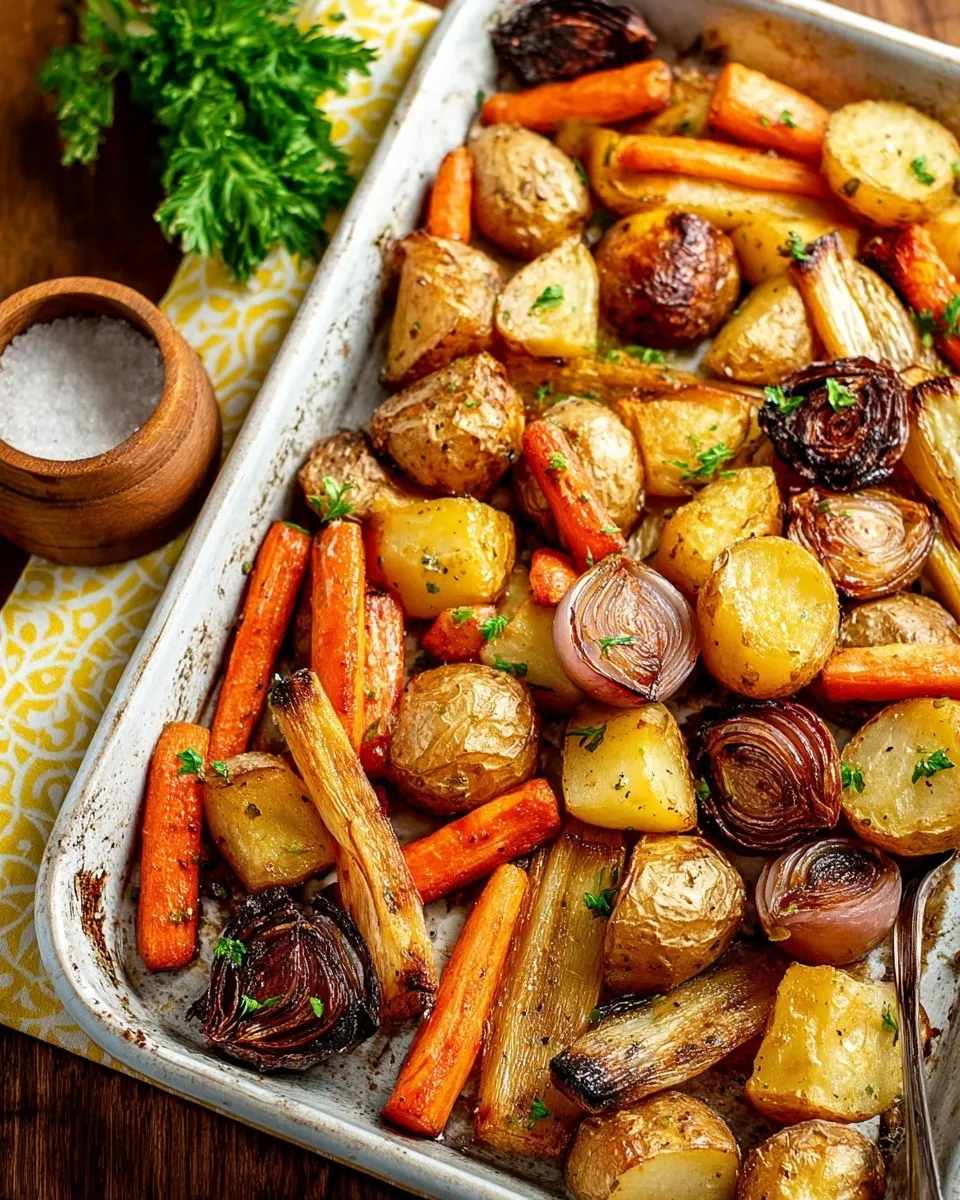
Tips & Variations for Oven Roasted Vegetables
My personal preference is sticking to classic root veggies, but you can also mix things up based on your pantry. Have you ever wondered why some pans turn out perfectly while others flop?
- Embrace the Seasons: For cozy fall and winter meals, push root vegetables like parsnips, carrots, and butternut squash to the forefront, creating perfect roasted vegetables for holiday spreads. In the spring and summer, opt for lighter fare by focusing on asparagus, zucchini, and cherry tomatoes for your roasting.
- Let Them Breathe: I recommend using two pans if you are doubling the recipe. A crowded pan guarantees soggy results, and you can clearly see the difference when looking at a crowded pan vs. a spaced pan comparison.
- Turn Up the Heat: While this recipe uses a moderate 390°F for a slow, sweet roast, it is helpful to cite temperature science that explains why 400–425°F is ideal for caramelization via the Maillard reaction. Try higher heat for a faster, blistered finish on softer produce.
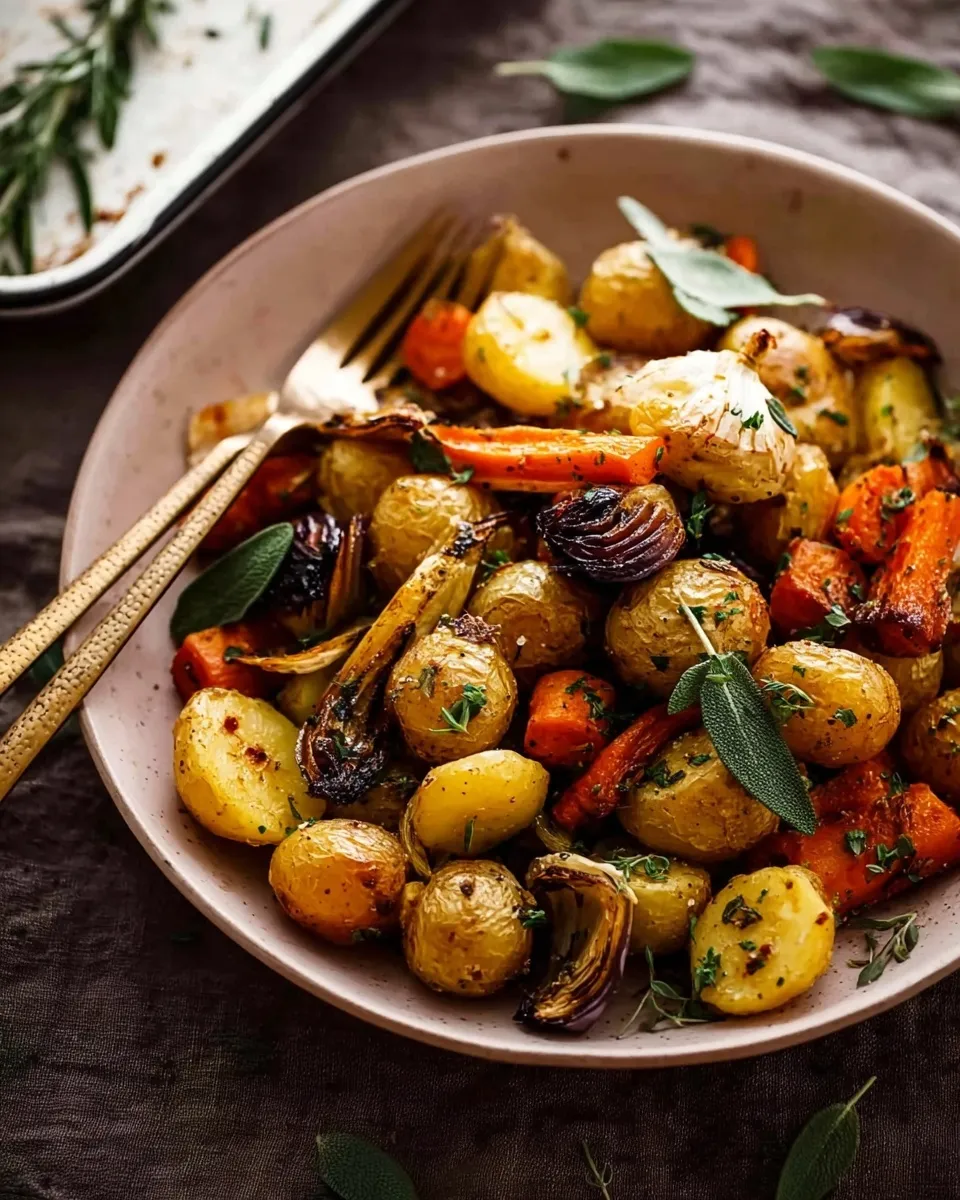
Storage & Make-Ahead Tips
You can absolutely prep these ahead! Store leftovers in an airtight container for up to four days. Reheating them in the oven revives that texture beautifully.
Nutrition Information
Nutritional information is approximate and may vary based on ingredients used. Expect a healthy dose of fiber, complex carbohydrates, and heart-healthy fats from the olive oil.
What to Serve With Perfect Roasted Vegetables
These perfectly roasted vegetables are incredibly versatile and pair beautifully with almost any protein. They bring a bold, earthy flavor that perfectly complements a juicy, classic roast chicken or a beautifully seared flank steak. I love serving them alongside a simple pan-fried pork chop, letting the sweet, caramelized onions act as a rustic, deeply flavorful relish.
If you prefer a plant-based dinner, try tossing these glossy, vibrant roasted root vegetables directly into a hearty grain bowl. Add some fluffy quinoa, a generous dollop of rich hummus, and a zippy lemon tahini dressing. The silky texture of the slow-roasted garlic mixed into the warm grains is absolutely outstanding. As a bonus, it’s one of those dinners that feels entirely elegant but is wonderfully forgiving to throw together on a busy weeknight. A batch of perfect roasted vegetables makes meal prep a breeze.
Frequently Asked Questions
What Temperature to Roast Vegetables?
When making perfect roasted vegetables, it depends on the vegetable and your desired texture. For most everyday roasting, 400–425°F is ideal for caramelization via the Maillard reaction. However, for denser root vegetables like the ones in this recipe, a slightly lower temperature (390°F) for a longer period allows the natural sugars to slowly release without burning the exterior.
How do you get roasted vegetables crispy?
The secret to getting crispy edges is twofold: a generous oil coating and proper pan spacing. You must ensure the vegetables are in a single layer with absolutely no crowding. If they touch or overlap on the sheet pan, they will steam instead of roast, robbing you of that crave-worthy crunch.
Which Vegetables Roast Together?
Always try sorting and grouping vegetables by density and cook time. Hard root vegetables roast beautifully together, while softer vegetables should either be grouped on a separate tray or added halfway through the cooking process.
Ready to Roast?
Mastering perfect roasted vegetables is truly one of the most rewarding skills you can bring into your kitchen. By just giving your veggies a little breathing room on the pan and letting the oven do the heavy lifting, you’ll unlock bright, bold flavors you never knew were there. I’d love to hear how this sheet-pan-roasted vegetable method works out for you! Please leave a comment or share your own tips below. Reader reviews or ratings on the recipe card really make a difference. Happy roasting!